Who Was Saint Patrick?
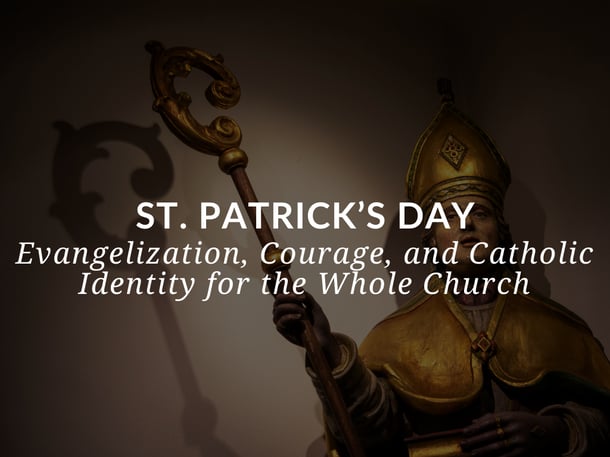
Saint Patrick (c. 385–461 AD) was born in Roman Britain. He was kidnapped by pirates as a teenager and sold into slavery in Ireland. For six long years, Patrick worked as a shepherd. Although he was isolated and afraid during this time, he turned to God in prayer, developing a deep and personal relationship.
Patrick escaped and returned home but felt called by to God’s to return to Ireland—this time as a bishop and missionary. Patrick preached the Gospel to the very people who once enslaved him with humility and courage. His life became a powerful witness to forgiveness, trust in God, and missionary zeal.
Patrick became well known for his ability to teach the faith in simple, memorable ways. Tradition credits him with using the three-leaf clover, or shamrock, to explain the mystery of the Holy Trinity: Father, Son, and Holy Spirit, three Persons in one God. His writings, particularly the Confessio, reveal his complete dependence on God’s grace and deep awareness of God’s mercy.

How St. Patrick’s Day Is Celebrated Around the World
A Feast of Faith and National Identity
In Ireland, March 17 is both a cultural celebration and a sacred feast day. Catholics attend Mass to honor their patron saint, and many families pray traditional prayers such as the Lorica, or the Breastplate of Saint Patrick—a powerful prayer invoking Christ’s protection.
Cities like Dublin and Armagh host events that blend prayer, pilgrimage, and national pride, reminding the faithful that Ireland’s Christian identity is rooted in Saint Patrick’s missionary work.
Irish-American Catholic Witness
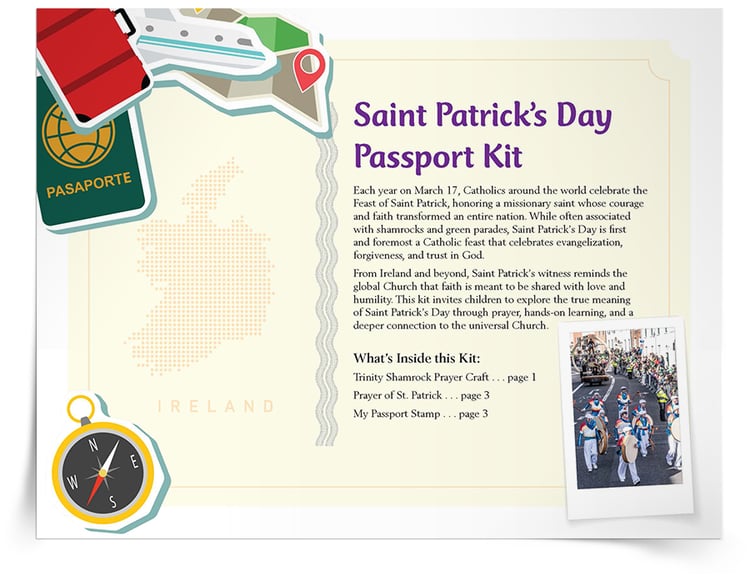
Saint Patrick’s Day is celebrated widely beyond Ireland. Some of the largest Saint Patrick’s Day parades in the world take place in the United States. These parades began as expressions of faith and identity among Irish Catholic immigrants, who historically faced discrimination for both their ethnicity and religion.
Today, cities like New York, Boston, and Chicago continue the tradition with parades, green landmarks, and special Irish-themed Masses. For Catholic families, these celebrations are an opportunity to talk with children about religious freedom, immigration, and the courage it takes to live out one’s faith.
Nigeria, Australia, and Beyond
Saint Patrick’s influence extends far Irish-descended communities. In Nigeria, Catholics honor Saint Patrick because of Irish missionaries who helped evangelize parts of Africa. In Australia and Canada, Catholic schools and parishes celebrate the feast with liturgies, assemblies, and faith-based cultural events.
Across the globe, Saint Patrick’s Day reminds the Church that evangelization crosses borders and that one saint’s “yes” to God can shape generations of believers.