Each year in February, Catholics around the world turn their hearts toward a small town in southern France where heaven once met earth in a quiet and extraordinary way. The Feast of Our Lady of Lourdes, celebrated on February 11, invites the faithful to remember Mary’s appearances to a humble young girl and to reflect on God’s enduring promise of healing, mercy, and hope.
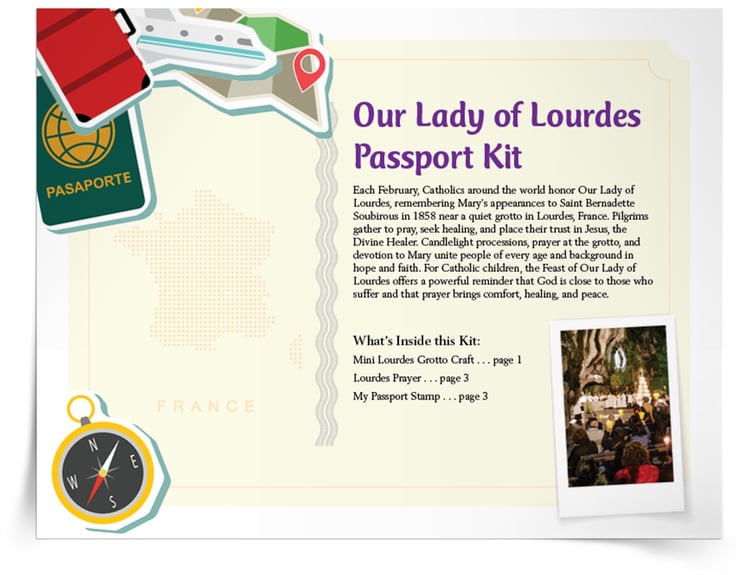
As part of our ongoing journey through Catholic cultural celebrations, this feast helps children and families see how faith is lived not only through tradition, but through trust in God’s care during times of illness and suffering. Be sure to bring along your My Catholic Passport as you follow each celebration; add a new stamp for every destination we visit together on the Sadlier Religion blog this year. After beginning the year with Epiphany in Spain, our February destination brings us to Lourdes, France, and a Marian devotion that unites Catholics across the globe.

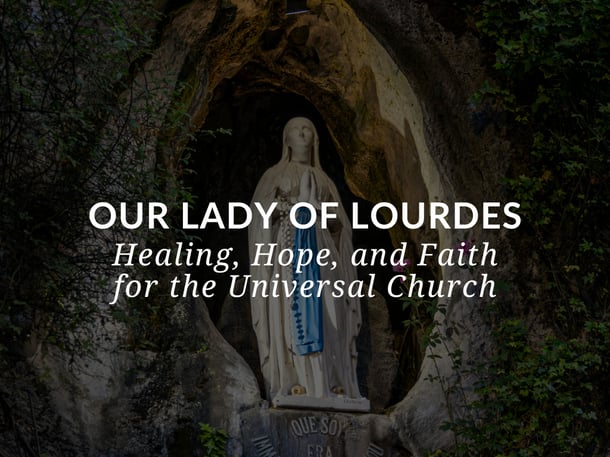
The Feast of Our Lady of Lourdes commemorates the first of eighteen apparitions of the Blessed Virgin Mary to Saint Bernadette Soubirous in 1858. At just fourteen years old, Bernadette encountered Mary near a grotto along the Gave de Pau River in Lourdes. Over the course of the apparitions, Mary called Bernadette, and all the faithful, to prayer, penance, and conversion.
During one apparition, Mary revealed herself as the Immaculate Conception, affirming a core Catholic teaching formally proclaimed only four years earlier. Another defining moment occurred when Bernadette was instructed to dig into the ground, uncovering a spring of water that would later become associated with remarkable healings.
Today, the Church celebrates this feast as a reminder that Christ is the true healer and that Mary lovingly intercedes for her children, especially those who suffer.
Lourdes has become one of the most visited pilgrimage sites in the world. Each year, millions of pilgrims (many of them sick, elderly, or disabled) travel to the shrine seeking healing, strength, or peace. The Church has officially recognized more than seventy miraculous healings connected to Lourdes, each carefully studied and verified.
For Catholic families, Lourdes offers reassurance that prayer matters, that suffering is seen by God, and that healing takes many forms: physical, emotional, and spiritual.

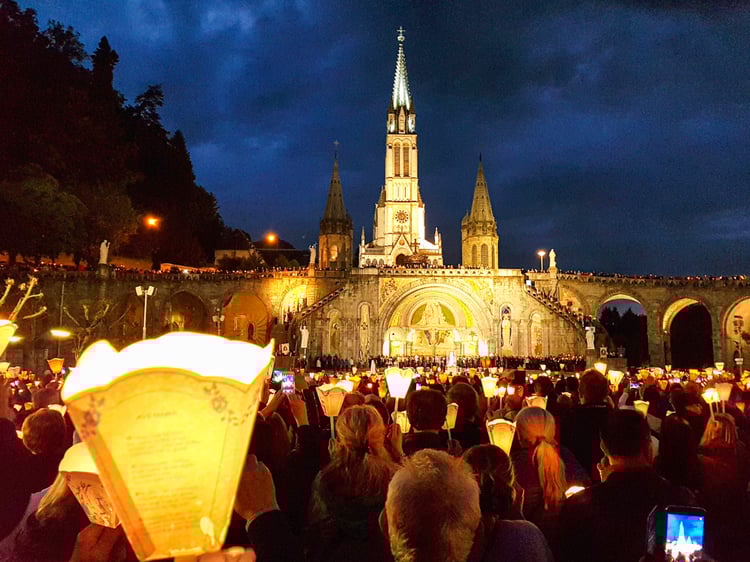
Although Lourdes is rooted in France, its message belongs to the entire Church. Pilgrims from every continent gather at the shrine, praying together in many languages yet united by the same faith. Candlelight processions, Marian hymns, and shared moments of quiet prayer reflect the universality of Catholic devotion to Mary.
This global witness helps children understand that they are part of something much larger than their parish or school—a Church that spans cultures and nations, united in prayer and hope.
One of the most powerful aspects of the Lourdes story is the person chosen to receive Mary’s message. Bernadette was poor, frequently ill, and often dismissed by others. Yet God entrusted her with an extraordinary mission.
For children, Bernadette’s life teaches an essential Gospel truth: God often works through the humble and the overlooked. Faithfulness, obedience, and trust matter far more than status or strength.
God often works through the humble and the overlooked. Faithfulness, obedience, and trust matter far more than status or strength.
The Feast of Our Lady of Lourdes offers rich opportunities for faith formation, especially for children learning how to pray through difficulty, with key theme relating to:
For catechists, Lourdes provides a natural connection between Scripture, doctrine, and lived faith. For families, it opens meaningful conversations about prayer, healing, and God’s presence in everyday struggles.
Invite children to pray for someone who is sick or hurting. This could include a short prayer to Our Lady of Lourdes or a decade of the Rosary offered for healing and comfort.
Using a shoebox or cardstock base, children can build a small grotto with paper “rocks,” blue tissue paper for water, and an image of Mary. Encourage them to place written prayer intentions near the spring as a reminder to trust God with their needs.
Have children write the names of people they are praying for on paper “water drops” or slips of paper. These can be placed in a prayer basket or near a home or classroom prayer space.
Read a child-friendly story or watch a short video about St. Bernadette’s life. Discuss how her faith and humility helped her say “yes” to God, even when it was difficult.
Provide coloring pages or journaling prompts focused on themes of healing, trust, and prayer. Ask children: How can I show kindness and care to someone who is hurting?
The Feast of Our Lady of Lourdes reminds Catholics everywhere that Mary’s love is not limited by geography or time. From hospitals and nursing homes to classrooms and family kitchens, prayers to Our Lady of Lourdes rise daily from every corner of the world.
This feast strengthens the Church’s mission of mercy and compassion, calling believers to care for the sick and vulnerable as Christ did. For children, it nurtures empathy and reinforces the belief that prayer connects us to one another and to God across all boundaries.
The story of Lourdes is ultimately a story of trust: trust in God’s plan, trust in prayer, and trust that Christ continues to heal hearts today. Through Mary’s gentle presence and Bernadette’s faithful response, Catholics are reminded that hope is never lost even in suffering.
As families and catechists celebrate the Feast of Our Lady of Lourdes, they help children encounter a faith that is compassionate, resilient, and deeply rooted in love. In joining this global celebration, we affirm a timeless truth of the Church: God is near, Mary intercedes, and healing, seen or unseen, is always possible.