1.800.221.5175
Catechetical Programs
Christ In Us Grades K–8
Parish, K–8
School, K–8
Bilingual, K–6
We Believe: Living Your Catholic Identity Grades K–8
Parish
School
Full Access
Bilingual, K–6
Bilingual, 7–8
One Faith, One Lord Grades 7–Adult
English
Bilingual
Our Catholic Faith Grades 4–6
English
Bilingual
God’s Own Making
Grades 4-8
We Believe: Discovering God
PreK/Ages 3–5
Between You and Your Child
English
Spanish
Catechetical Bilingual
Creemos: Descubriendo a Dios
Edades 3–5
Creemos Identidad católica
Cursos K–6
Cristo en nosotros
Cursos 1–6
Vivimos nuestra fe
Cursos 7–8
Nuestra fe católica
Cursos 4–6
Una sola fe, un solo Señor
Cursos 7–Adulto
Entre usted y sus hijos
Cursos K–8
Sacraments Programs
Believe • Celebrate • Live | Bilingual Edition Ages 7–15
Reconciliation Primary
Eucharist Primary
Reconciliation & Eucharist Intermediate
Confirmation Restored Order
Confirmation
We Believe and Celebrate
Baptism
Spanish Edition
Prayer Books
My Reconciliation and Prayer Book, Ages 7–9
Mi Reconciliación y libro de oración, Edades 7–9
My Mass Book, Ages 7–9
Mi libro de la Misa, Edades 7–9
We Believe and Pray, Grades 4–6
Sacraments Bilingual
Creer • Celebrar • Vivir Edades 7–15
Reconciliación Primaria
Eucaristía Primaria
Reconciliación y Eucaristía Intermedio
Confirmación Restauración del orden sacramental
Confirmación
Creemos y celebramos
Bautismo
Libros de oración
Mi Reconciliación y libro de oración, Edades 7–9
Mi libro de la Misa, Edades 7–9
Lifelong Faith
Bible Resources
The Compass Bible for Catholic Teens
YOUCAT: Youth Catechism of the Catholic Church
YOUCAT: Catecismo Joven de la Iglesia Católica
La Biblia católica para jóvenes
Adult Resources
Becoming a Parish of Mercy
Catechism
United States Catholic Catechism for Adults
General Directory for Catechesis
Professional Development
Catechetical Learning
Theology of the Body Course
Catholic Identity Course
Resources
English | View All
Catechetical Resources
Virtual Events
Religion Blog
Catechetical Downloads
Videos
Liturgical Seasons
CHATechesis Podcast
Bilingual | ver todos
Recursos catequéticos
Eventos Virtuales
Blog de Sadlier Religion
Descargas Catequéticas
Videos
sadlierReligion Hero-1.png

June 3, 2026 REL Seasons - Feast Days/Holidays, REL Asset - Activity, REL Catechetical - K–6

Our Lady of Africa: Peace, Unity, and Catholic Identity Across Cultures

Every July, something extraordinary happens in Chile’s Atacama Desert. The small village of La Tirana becomes the center of the nation’s largest religious celebration, honoring Our Lady of Mount Carmel. In this post, you’ll discover how this vibrant festival blends Catholic devotion with Indigenous-Andean culture, what it teaches children about Mary, and how to bring its meaning into your home or classroom. As you explore, bring along your My Catholic Passport and add Chile as your next global stop.

Sadlier Religion Blog Title Image_Our Lady Of Africa


Mary and the Mission of Unity

Each May, Catholics around the world honor Mary as Mother, guide, and intercessor. Through Marian devotions, we are reminded that Mary always leads us closer to Jesus and helps us live our faith more fully.

Marian devotion is both personal and missionary. It shapes how we see others, how we pray for the world, and how we live our Catholic identity across cultures.

Marian devotion is both personal and missionary. It shapes how we see others, how we pray for the world, and how we live our Catholic identity across cultures.

One powerful example of this is the devotion to Our Lady of Africa, a Marian title that calls the Church to unity, peace, and evangelization across an entire continent. Rooted in Algeria but embraced throughout Africa and beyond, this devotion reminds us that Mary’s motherhood extends to all people.

What Is the Devotion to Our Lady of Africa?

Our Lady of Africa is a title of the Blessed Virgin Mary associated with a statue in Algiers, but the devotion itself reaches far beyond a single place. It has become a spiritual symbol for the entire African continent and for the Church’s missionary calling.

The feast of Our Lady of Africa is celebrated on April 30, especially across North and Sub-Saharan Africa, and by missionary communities around the world. From its earliest days, this devotion was connected to:

  • Prayer for the people of Africa
  • Missionary outreach and evangelization
  • Unity across cultures and religions

This reflects a deep awareness of shared reverence for Mary and a desire for peace and dialogue among all people.

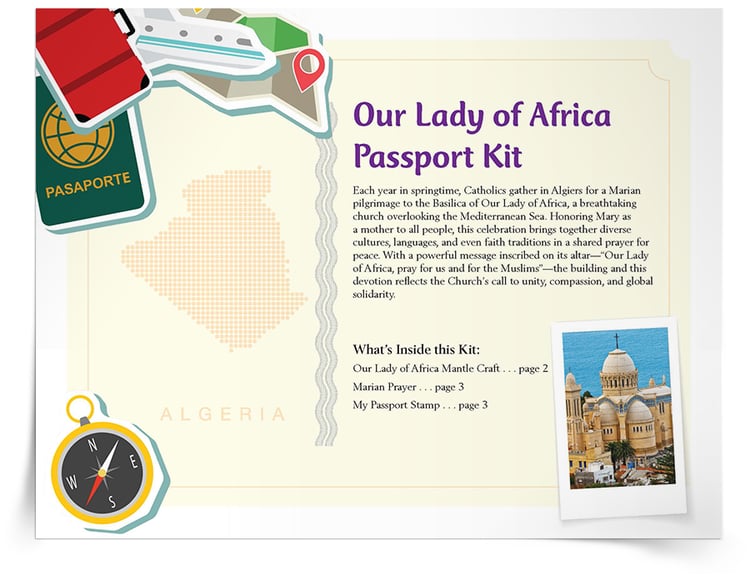
Our Lady of Africa Passport Kit

Help children and families learn about and honor Mary as Our Lady of Africa. Explore, craft, reflect, pray, and get a collectable passport stamp. 

REL_Thumb_OurLadyOfAfricaPassportKit

Download Now

Descargar ahora


The Origins: A Grassroots Beginning of Faith

Unlike many devotions that begin with apparitions or major events, the story of Our Lady of Africa begins quietly with prayer.

In 1846, two women in Algeria placed a statue of Mary in a small natural setting and began praying the Rosary. Over time, others joined them, and the site became a place of pilgrimage and devotion. As devotion grew:

  • A grotto was built to honor Mary
  • A statue known as the “Faithful Virgin” was renamed Our Lady of Africa
  • The image came to be associated with a Black Madonna, reflecting the people she serves. 

Eventually, this local devotion expanded into a wider movement of faith. It became closely connected to missionary efforts and to the founding of the Missionaries of Africa and the Missionary Sisters of Our Lady of Africa.

This origin story is important. It reminds us that Catholic identity often begins in small acts of faith: prayer, community, and trust in God.

What Is the Our Lady of Africa Pilgrimage?

The Basilica of Our Lady of Africa was built in the 19th century and remains one of the most recognizable Catholic sites in North Africa. Overlooking the sea, it welcomes pilgrims from across Africa and beyond—many traveling great distances to honor Mary.

In April and May, Catholics gather for a Marian pilgrimage marked by:

  • Processions and Mass celebrated in multiple languages
  • Pilgrims from diverse cultures across Africa and Europe
  • Prayer intentions for peace, healing, and reconciliation
  • A striking inscription near the altar: “Our Lady of Africa, pray for us and for the Muslims.”

This final detail is especially significant. It reflects a deep awareness that Mary is honored not only by Christians but also respected within Islam, making this shrine a place of encounter and shared reverence.

A Devotion That Became a Mission

Church leaders in Algeria recognized that Mary could play a vital role in evangelization across Africa. As missionaries prepared to bring the Good News to new regions, they entrusted their work to her care. Over time, this devotion spread across the African continent, into the African diaspora and Into churches and communities around the world. 

Today, Our Lady of Africa is a symbol of the Church’s missionary identity, Mary’s ongoing presence with her children and hope in places facing hardship, poverty, or conflict. 

A Witness of Unity Across Faiths and Cultures

One of the most striking aspects of this devotion is its emphasis on unity.

From its earliest days, the shrine associated with Our Lady of Africa became a place of shared devotion and encounter. Christians gathered there for prayer, while Muslims—who honor Mary as Maryam in Islam—also came in reverence. People from many backgrounds brought their intentions, hopes, and needs, creating a space marked by quiet unity. Historical accounts even describe Muslim women praying at the site and families offering gifts in gratitude or petition, reflecting a deep and mutual sense of trust in Mary’s intercession.

This reflects the powerful truth that Mary’s motherhood is not limited by borders, cultures, or religions.

For the Church today, this devotion models:

  • Interfaith respect and dialogue
  • Peaceful coexistence
  • A shared search for God

Our Lady of Africa and Catholic Identity 

The devotion to Our Lady of Africa offers a clear and compelling vision of Catholic identity. To be Catholic is to be:

  • Universal – part of a global Church that spans every culture
  • Missionary – called to share Christ with others
  • Relational – open to encounter, dialogue, and understanding

Mary helps form this identity in us. She is not a distant figure. Instead, she is an active mother who continues to guide, support, and accompany the Church in its mission. Mary continues her maternal role in the Church by accompanying and guiding all those whom Jesus entrusted to her care.

Mary helps form this identity in us. She is not a distant figure. Instead, she is an active mother who continues to guide, support, and accompany the Church in its mission.

Teaching Children Through This Devotion

For children, Our Lady of Africa offers a powerful way to understand the global Church and their place within it. This devotion helps them see that faith exists in every part of the world. Mary belongs to all people. Every Catholic is connected to a worldwide family of believers. 

Mary as a Mother for the Whole World

One of the most beautiful aspects of Our Lady of Africa is how clearly it reflects the universality of the Church. Mary is not limited by language, nationality, or culture. She is honored in every corner of the world, yet always draws people together in unity.

In Algeria, this universality becomes visible:

  • The basilica blends European and North African architectural styles
  • Pilgrims pray in Arabic, French, and other languages
  • The image of Mary reflects the diversity of the people she gathers  

This reminds us that to be Catholic—and universal—is to recognize Christ present in every culture and every person. Mary helps form this vision in us. She teaches us to see others with compassion, to listen, and to welcome.

Ways to Honor Mary, Mother of God, with Children

For children, learning about Our Lady of Africa is more than a geography lesson. It helps them understand that their faith connects them to a global Church and calls them to live with empathy and awareness.

Here are simple ways to bring this celebration into your home or classroom:

Mary Around the World

Create a world map and place Marian titles in their countries:

  • Our Lady of Africa (Algeria)
  • Our Lady of Guadalupe (Mexico)
  • Our Lady of Fatima (Portugal)

Blog Image_Catholic Identity The Joy of Catholic Parenting (1)

Living This Devotion Today

The message of Our Lady of Africa is both simple and challenging: To be Catholic is to love across differences.

In our daily lives, this might look like:

  • Including someone who feels left out
  • Praying for people in other countries
  • Learning about cultures different from our own
  • Speaking with kindness and respect

These small actions reflect a larger truth: Catholic identity is lived not only in church, but in how we treat others every day.

One Church, One Mother

From the hills of Algiers to classrooms and homes around the world, Our Lady of Africa reminds us that we belong to something bigger than ourselves. Mary gathers us into one family across languages, cultures, and continents. She teaches us that unity is not sameness, but love rooted in Christ.

By sharing this devotion with children, we help form hearts that are open, compassionate, and ready to live their Catholic identity with courage and joy. In doing so, we continue Mary’s mission: to bring the world closer together under the love of her son, Jesus Christ.